
When Work Stress Follows You Home
The Editorial Team | Friend Indeed
1/25/20264 min read
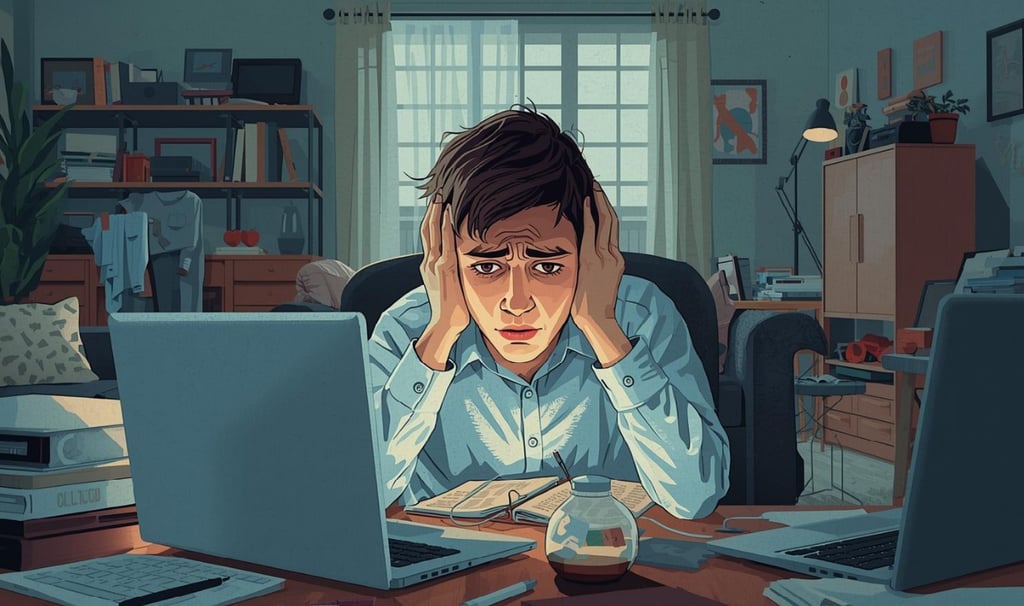

Why You Can’t Switch Off Even After the Workday Ends
You log off.
You leave the workplace.
You sit down at home.
And yet, your mind is still at work.
You replay conversations.
You think about unfinished tasks.
You anticipate tomorrow.
You feel tense without knowing exactly why.
If this sounds familiar, you are not failing at rest. You are experiencing something very common in modern work life.
Work stress does not always end when the workday ends. For many people, it quietly travels home with them.
What It Really Means When You Can’t Switch Off
Not being able to switch off is not about poor time management or lack of discipline. It is often about emotional carryover.
Your body and mind do not distinguish clearly between physical spaces anymore. Emails, messages, deadlines, and expectations blur the line between work and personal life.
So even when work stops externally, it continues internally.
The World Health Organization recognises chronic work-related stress as a growing global concern, especially in environments where boundaries between work and rest are unclear.
Source: https://www.who.int/health-topics/mental-health
Signs That Work Stress Is Following You Home
Work stress does not always look dramatic. Often, it shows up quietly.
You might notice:
Difficulty relaxing even during free time
Feeling irritable or emotionally flat in the evenings
Mentally rehearsing work conversations
Feeling guilty when not being productive
Trouble sleeping because your mind feels “on”
These are not signs of weakness. They are signs that your nervous system has not had a chance to downshift.
Why This Happens More Than Ever
1. Your Brain Stays in Problem-Solving Mode
Most jobs require constant decision-making, vigilance, and responsiveness. Over time, your brain learns to stay alert even when it is no longer necessary.
Without intentional transitions, the mind assumes work is still ongoing.
The American Psychological Association notes that chronic cognitive engagement without adequate recovery increases emotional fatigue and stress responses.
Source: https://www.apa.org/topics
2. Emotional Load Goes Unprocessed
Work stress is not just about tasks. It is about emotions.
Frustration with colleagues.
Pressure to perform.
Fear of making mistakes.
The need to appear capable.
When these emotions are not acknowledged or expressed, they linger.
Unprocessed emotional load often shows up later as restlessness, irritation, or mental exhaustion.
3. Productivity Has Become Tied to Self-Worth
For many people, work is no longer just something they do. It becomes something they are.
So switching off feels risky.
Rest can feel undeserved.
Relaxation can feel lazy.
Silence can feel uncomfortable.
When self-worth is linked to output, the mind resists rest even when the body needs it.
Why Typical Advice Often Doesn’t Work
You may have heard suggestions like:
“Just relax”
“Try to distract yourself”
“Be more disciplined with boundaries”
While well-intended, these approaches overlook something important.
You cannot force your nervous system to relax.
You have to help it feel safe enough to do so.
Work stress is not only cognitive. It is emotional and physiological.
This article is not a substitute for professional therapy. If your stress feels overwhelming, persistent, or begins to interfere significantly with daily life, seeking support from a licensed mental health professional is important.
Emotional Fitness and the Ability to Switch Off
Emotional fitness is not about eliminating stress. It is about learning how to complete emotional cycles.
When emotions related to work are acknowledged, named, and expressed, the body receives the signal that the situation has ended.
Without this, stress stays active.
Switching off is less about stopping thoughts and more about closing emotional loops.
What Actually Helps When Work Stress Lingers
1. Create an Emotional End to the Workday
Instead of only ending work physically, end it emotionally.
This can be as simple as:
Taking five minutes to reflect on what felt heavy
Acknowledging frustration or pressure instead of ignoring it
Writing down lingering thoughts to signal completion
Closure helps the mind shift gears.
2. Allow Decompression Before Engagement
Moving straight from work into social or family roles can feel overwhelming.
Your nervous system needs a buffer.
Even 10 to 15 minutes of quiet transition time can help your system recalibrate.
This is not avoidance. It is recovery.
3. Talk Without Trying to Solve
Many people carry work stress because they have no place to speak freely about it.
Talking things through without being judged, advised, or fixed helps release emotional tension.
Conversation can be regulating when it allows honesty instead of performance.
Why This Matters Long-Term
When work stress follows you home consistently, rest becomes shallow.
Over time, this can lead to:
Emotional exhaustion
Reduced joy
Irritability in relationships
Feeling disconnected from yourself
Addressing it early is not indulgent. It is preventive care.
Self Reflection for You
Take a few moments with these questions:
What part of my workday feels hardest to let go of?
Which emotions do I carry home most often?
Do I allow myself recovery, or only productivity?
What would an emotionally complete workday feel like?
You Are Not Bad at Rest. You Are Carrying Too Much.
If your mind keeps returning to work even when the day is over, it is not because you are doing something wrong.
It is because something inside you is still holding tension.
Friend Indeed offers a space for non-clinical, thoughtful conversations where you can talk through work stress without judgement or pressure to fix it. It is not therapy. It is a place to process, reflect, and reconnect with yourself through conversation.
Sometimes, switching off does not start with rest.
It starts with being understood.
Frequently Asked Questions
Why do I think about work even when nothing urgent is happening?
Because unresolved emotional or cognitive stress keeps the mind alert.
Is this burnout?
Not necessarily. It can be a sign of ongoing stress without adequate emotional recovery.
Can conversation really help with work stress?
Yes. Talking without judgement helps process emotional load and reduce internal tension.
Write to us at support@friendindeed.in
© 2026 Friend Indeed. All rights reserved.
DISCLAIMER:
This platform does not provide psychotherapy, medical advice, or suicide prevention services. For mental health emergencies or suicidal ideation, please seek assistance from a qualified medical professional.
Your friend indeed is just one click away